
Many cat owners believe that feeding dry kibble is enough to keep their cat’s teeth clean. The reasoning seems simple: crunchy food requires chewing, so it should scrape away plaque and reduce tartar buildup. While dry food can be convenient and may offer nutritional benefits, ordinary cat kibble does not automatically provide effective dental cleaning.
Feline oral health requires more attention than simply choosing between dry and wet food. Plaque can accumulate along the gumline, bacteria can contribute to inflammation, and untreated dental disease can eventually cause significant discomfort. Regular examinations and appropriate home care remain important, even when your cat eats dry food every day.
At All Creatures Veterinary Center in Carrollton, understanding common dental care myths can help cat owners make better decisions about their pets’ long-term health. Let’s explore what crunchy kibble actually does, how specialized dental diets work, and why professional cleaning still matters.
Myth 1: Regular Dry Kibble Naturally Brushes a Cat’s Teeth
One of the most common misconceptions about feline dental care is that ordinary dry kibble works like a toothbrush.
In reality, most standard cat kibble is relatively small and brittle. When a cat bites down, the food often fractures near the tip of the tooth rather than creating sustained contact with the tooth surface near the gumline.
This distinction matters because plaque commonly accumulates around the gumline and between teeth. Simply chewing crunchy food does not necessarily remove these deposits from the areas where dental disease often begins.
Some kibble pieces may create limited friction as a cat chews, but that does not mean regular dry food provides reliable plaque control. Cats that eat only kibble can still develop gingivitis, periodontal disease, and other oral health problems.
Dry food should therefore be viewed as part of a feeding routine, not a replacement for brushing or professional dental care.
Myth 2: All Dental Kibble Works the Same Way
Not all dry food is designed with dental health in mind. Ordinary kibble and specialized dental diets can have very different structures.
Certain veterinary dental diets use larger pieces, specialized textures, or unique fiber matrices designed to interact with the tooth during chewing.
Instead of immediately crumbling, these specially formulated pieces may resist breaking long enough to allow the tooth to penetrate deeper into the food. This creates contact along more of the tooth surface and can help reduce plaque accumulation.
Some dental diets have received acceptance from the Veterinary Oral Health Council (VOHC). The VOHC evaluates products based on evidence that they meet established standards for reducing plaque or tartar when used as directed.
However, a product being marketed as dental food does not automatically mean it has demonstrated dental benefits. Cat owners should look for products with appropriate VOHC acceptance and discuss dietary suitability with their veterinarian.
Even a specialized dental diet is a preventive support tool, not a substitute for treating existing dental disease.
Understanding Plaque, Tartar, and Gum Disease in Cats
To understand why kibble alone is not enough, it helps to know how dental disease develops.
Plaque is a soft bacterial film that forms on tooth surfaces. It begins accumulating soon after cleaning and can collect around the gumline. If it is not regularly disrupted, minerals in saliva can contribute to its hardening into tartar, also called dental calculus.
Tartar creates a rough surface that makes further plaque accumulation easier. Over time, bacteria and inflammation can affect the gums and supporting structures around the teeth.
Common signs of dental problems in cats include:
- Persistent bad breath
- Red or swollen gums
- Yellow or brown deposits on teeth
- Dropping food while eating
- Chewing on one side of the mouth
- Drooling more than usual
- Pawing at the mouth or rubbing the face
- Reduced interest in food
Cats are often good at hiding discomfort. A cat may continue eating even when its mouth is painful, so maintaining an appetite does not necessarily mean its teeth are healthy.
Why Professional Ultrasonic Scaling and Polishing Matter
Home dental care can help control plaque, but it cannot remove every established deposit. Once tartar hardens onto the teeth, professional cleaning may be necessary.
A veterinary dental procedure generally involves an examination of the mouth, ultrasonic scaling, and polishing.
Ultrasonic scaling uses specialized equipment to remove plaque and hardened tartar from tooth surfaces. The veterinary team also addresses deposits around the gumline and evaluates areas that may be difficult to inspect during a routine awake examination.
Polishing smooths the tooth surfaces after scaling. This helps reduce surface irregularities where plaque can collect.
A comprehensive dental assessment may also include dental radiographs. These images help evaluate tooth roots and supporting bone beneath the gumline, where problems may not be visible during a surface examination.
Professional dental cleaning is generally performed under anesthesia so the veterinary team can examine and clean the mouth thoroughly while protecting the patient’s comfort and safety.
If a tooth is severely damaged or affected by advanced disease, additional treatment, including extraction, may be recommended. This is different from pet surgery involving unrelated conditions, but it illustrates why identifying oral disease early is important.
Does Your Cat Need Both Dental Food and Toothbrushing?
For many cats, combining appropriate dietary support with daily home care offers a more complete approach to oral health.
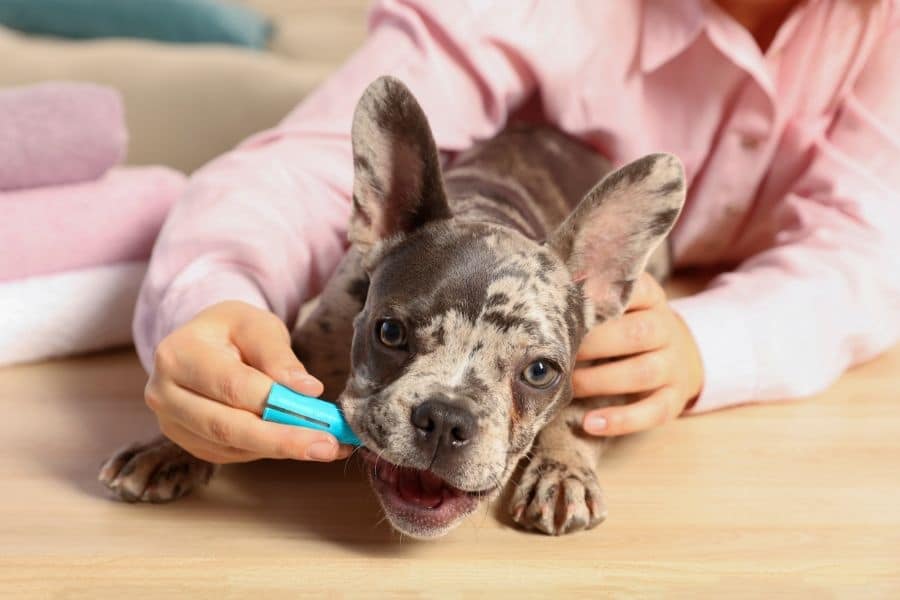
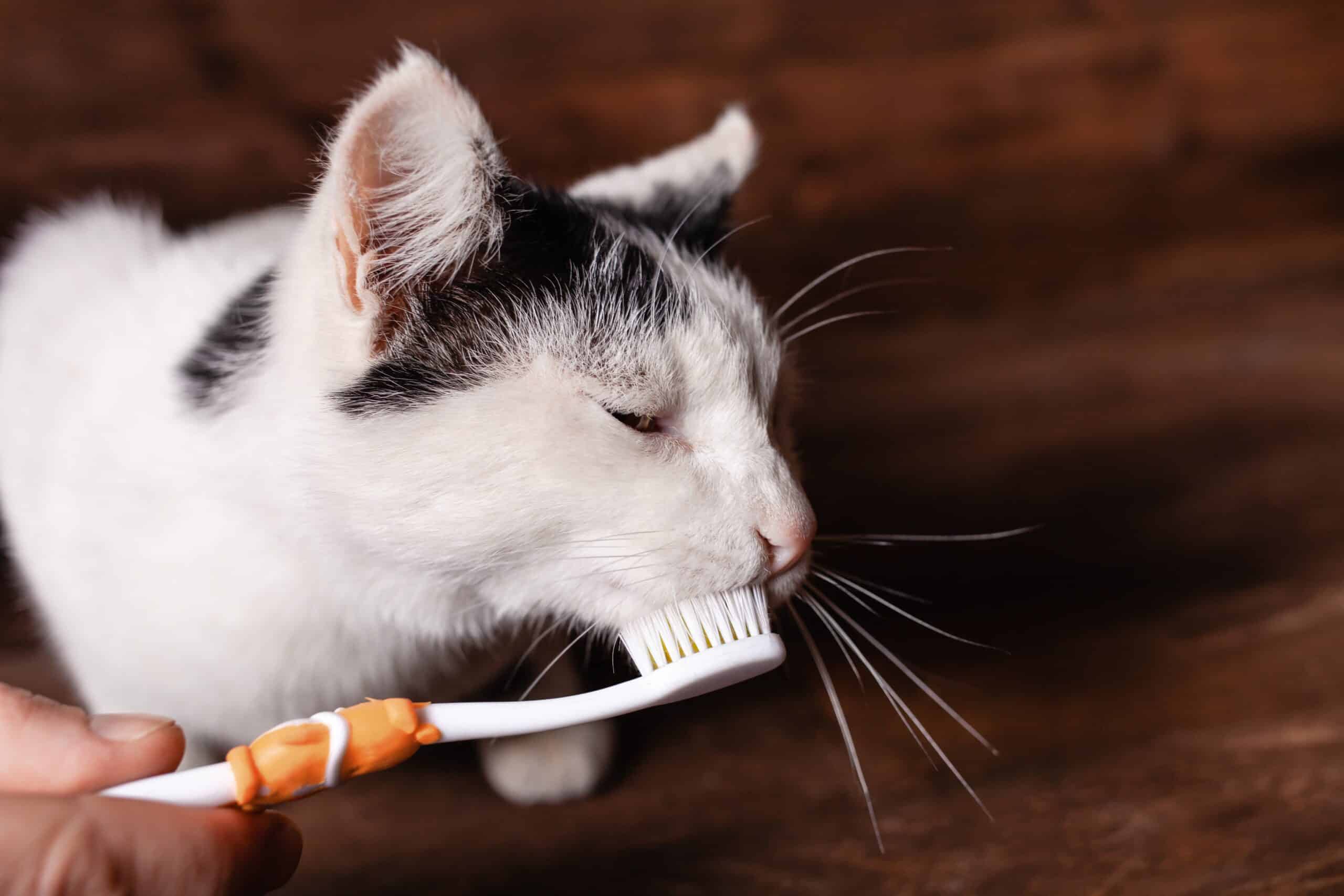
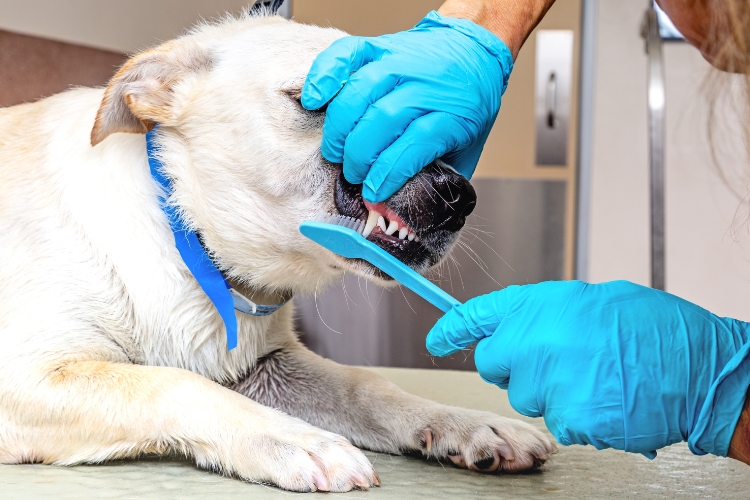
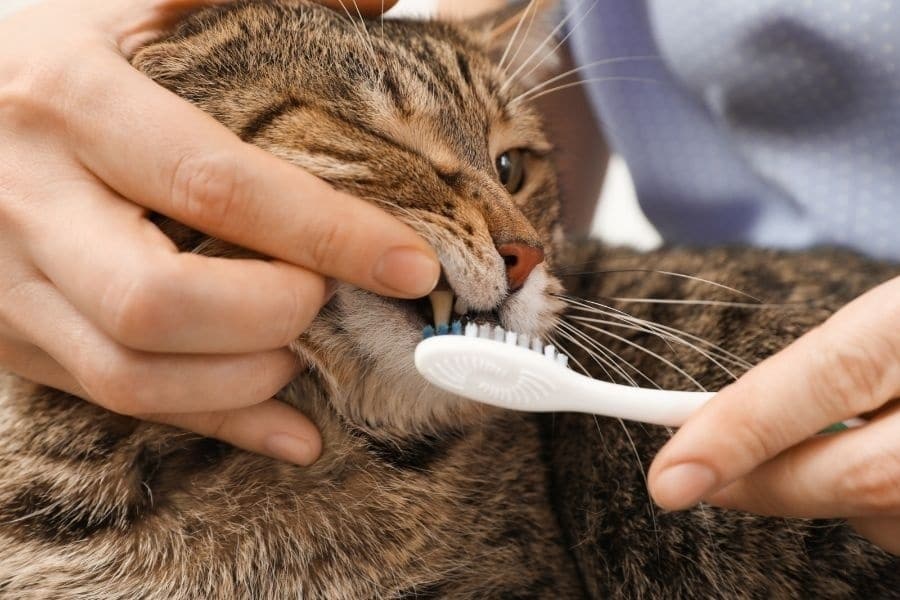
Brushing is particularly useful because it physically disrupts plaque before it hardens into tartar. Use a toothbrush designed for cats and toothpaste formulated specifically for pets. Human toothpaste should not be used because some ingredients can be harmful if swallowed.
If your cat is unfamiliar with brushing, introduce the process gradually:
- Begin by allowing your cat to smell and investigate the toothbrush.
- Introduce a small amount of pet-safe toothpaste.
- Gently touch the lips and outer surfaces of the teeth.
- Gradually work toward brushing for longer periods as your cat becomes comfortable.
- Keep sessions positive and stop if your cat becomes distressed.
Early socialization and positive handling experiences can make routine grooming and oral care easier as kittens grow. However, adult cats can also learn to tolerate gentle dental care through patience and gradual introductions.
If brushing is not possible, ask your veterinarian about suitable dental diets, treats, or other products with demonstrated benefits.
Why Routine Dental Examinations Should Not Be Skipped
Even if your cat eats specialized dental food and tolerates regular brushing, veterinary examinations remain essential.
A veterinarian can identify early gum inflammation, fractured teeth, abnormal tooth development, and other conditions that may not be obvious at home.
Cats can also develop problems such as tooth resorption, a painful condition in which the tooth structure gradually breaks down. These lesions may be hidden beneath the gumline and cannot be prevented simply by feeding crunchy food.
Routine examinations allow the veterinary team to assess changes over time and recommend professional cleaning or additional diagnostics when appropriate.
The frequency of dental evaluations depends on your cat’s age, oral health, medical history, and individual risk factors. Your veterinarian can help establish a suitable care schedule.
Building a Practical Dental Care Routine for Your Cat
A consistent routine is more useful than relying on one product or feeding choice. Consider these habits:
- Check your cat’s mouth periodically for visible changes.
- Brush the teeth regularly using pet-safe products when tolerated.
- Choose dental diets or treats based on veterinary recommendations and recognized evidence.
- Avoid excessively hard objects that could damage teeth.
- Schedule routine veterinary examinations.
- Follow recommendations for professional cleaning when deposits or dental disease are identified.
Remember that dental products support prevention, but they cannot reverse advanced periodontal disease or repair damaged teeth.
Schedule a Feline Dental Appointment at All Creatures Veterinary Center
Crunchy kibble may be convenient, but ordinary dry food alone cannot guarantee clean teeth or healthy gums. Specialized dental diets can provide additional support, while brushing and professional ultrasonic scaling address plaque and tartar more directly.
If your cat has bad breath, visible tartar, red gums, or changes in eating habits, schedule a dental appointment at All Creatures Veterinary Center in Carrollton. Our veterinary professionals can evaluate your cat’s oral health, discuss suitable dental care options, and recommend a preventive or treatment plan based on your pet’s needs.
Book your cat’s veterinary appointment today and take a proactive step toward maintaining healthier teeth and gums.
Frequently Asked Questions
Q1. Does ordinary dry kibble remove plaque from a cat’s teeth?
Ans: Not reliably. Most standard kibble breaks apart near the tooth tips rather than creating enough contact along the gumline to remove plaque effectively. Additional dental care is still necessary.
Q2. What makes veterinary dental diets different from regular cat food?
Ans: Specialized dental diets may use larger kibble pieces, unique textures, or fiber matrices that allow more tooth contact during chewing. Some products have VOHC acceptance for demonstrated plaque or tartar reduction.
Q3. Can dental treats replace brushing for cats?
Ans: Dental treats may provide additional oral health benefits when appropriately selected, but they do not completely replace brushing or professional examinations. Ask your veterinarian which products are suitable for your cat.
Q4. Why does my cat have bad breath even though it eats dry food?
Ans: Bad breath can result from plaque buildup, gingivitis, periodontal disease, or other oral conditions. Persistent unpleasant breath should be evaluated by a veterinarian rather than attributed to diet alone.
Q5. How often should my cat receive professional dental cleaning?
Ans: There is no single schedule for every cat. The appropriate frequency depends on tartar accumulation, gum health, age, and individual dental risks. Your veterinarian can recommend an examination and cleaning schedule based on your cat’s condition.