
Cats are naturally curious, playful, and quick to explore their surroundings. For an energetic cat, being asked to rest after an operation can feel frustrating. Your cat may want to leap onto furniture, chase toys, race through hallways, or climb to a favorite windowsill long before the body is ready for those activities. However, too much movement during recovery can place stress on healing tissues and interfere with the healing process.
For cat owners in Carrollton, understanding how to manage an active cat after cat surgery is an important part of post-operative care. The goal is not simply to keep your cat still, but to create a comfortable environment that limits risky movements while providing safe ways to stay mentally engaged. All Creatures Veterinary Center can help you understand your cat’s recovery instructions and determine which activities are appropriate after a procedure.
Why Activity Restriction Matters After Cat Surgery
Cats may appear energetic even when their bodies are still healing. A cat that walks normally or shows interest in toys may not be ready to resume normal activity. Internal tissues, skin incisions, and surgical repairs need time to recover, and sudden movements can place pressure on these areas.
Jumping, running, twisting, and rough play may contribute to swelling, bleeding, discomfort, or complications involving the incision. Activity restrictions are particularly important after abdominal procedures, orthopedic operations, and surgeries that require careful protection of the surgical site.
The appropriate recovery period depends on the procedure, your cat’s overall health, and your veterinarian’s instructions. Some cats need only temporary restrictions, while others require several weeks of controlled activity. Follow the discharge instructions rather than relying on your cat’s apparent energy level to decide when normal play can resume.
Create a Quiet and Secure Recovery Area
One of the most effective ways to manage an energetic cat is to prepare a dedicated recovery space before bringing them home. Choose a quiet bedroom, small office, or other secure room where your cat can rest without encountering stairs, tall furniture, or other pets that may encourage play.
Arrange the room so essential items are easy to reach. Include comfortable bedding, fresh water, an appropriate litter box, and food according to the feeding instructions provided by your veterinarian. Keep the floor clear of cords, loose objects, and slippery surfaces that could cause your cat to stumble.
Remove access to cat trees, shelves, window ledges, and other elevated places. Close windows securely and check that doors cannot open unexpectedly, allowing your cat to dash into another room.
For especially active cats, a larger space is not always better. A smaller, comfortable area can make activity restriction easier, provided it offers enough room for normal movement and access to necessities. Ask your veterinary team whether a recovery pen or crate is suitable for your cat and procedure.
Replace Physical Play With Mental Enrichment
An active cat may become bored when running and climbing are restricted. Mental enrichment can provide stimulation without encouraging strenuous movement. Choose quiet activities that let your cat observe, sniff, or think while remaining in a controlled space.
Try these options when your veterinarian says your cat is comfortable enough to participate:
- Offer a familiar soft toy that does not encourage jumping or vigorous chasing.
- Sit nearby and speak gently to provide reassurance and companionship.
- Allow your cat to watch outdoor activity from a secure, low-level resting spot if this does not encourage climbing.
- Introduce calm interaction with a favorite toy while keeping all movement close to the floor.
- Provide familiar bedding or another safe item that carries a comforting scent.
Avoid toys that trigger sudden sprints, high jumps, twisting movements, or intense pouncing. Laser pointers, feather toys waved overhead, and fast-moving toys may encourage exactly the behavior your cat needs to avoid.
If your cat becomes excited or restless during an activity, stop and allow them to settle. Mental enrichment should reduce boredom, not create another reason to overexert themselves.
Make Mealtimes Calm and Predictable
Food can provide a familiar routine during recovery, but feeding activities should not require climbing, chasing, or excessive movement. Place food and water bowls on a stable surface at a comfortable height, following any specific positioning instructions from your veterinarian.
Offer the recommended food in the amounts and at the times advised by the veterinary team. If your cat eats quickly and becomes excited, smaller permitted meals may help maintain a calmer routine. Check with your veterinarian before changing feeding frequency or using food puzzles, particularly if your cat has dietary restrictions.
Avoid placing food on counters, window ledges, or elevated platforms to encourage movement. Puzzle feeders that require rolling, pawing, or vigorous manipulation may also be unsuitable during early recovery.
Monitor appetite and water intake. A noticeable decline in eating, repeated vomiting, or difficulty drinking should be discussed with your veterinarian. A calm feeding routine can help you recognize changes more easily.
Prevent Jumping, Climbing, and Rough Play
Limiting access to high places is essential when your cat is accustomed to exploring vertically. Move chairs away from counters, block access to shelves, and remove portable steps that could help your cat reach elevated furniture.
If your cat lives with other animals, separate them during the restricted recovery period when necessary. Even friendly companions may initiate chasing or wrestling. Children should also be taught not to encourage running, pick up the cat without guidance, or disturb them while resting.
Do not rely on verbal commands alone to prevent jumping. Cats may act instinctively when excited, startled, or interested in something outside the room. Adjusting the environment is usually more reliable than repeatedly trying to stop risky behavior after it begins.
If your cat repeatedly attempts to climb or cannot settle in the recovery space, contact your veterinarian for practical suggestions. The clinic can help determine whether changes to the room, additional supervision, or other measures are appropriate.
Use Protective Equipment as Directed
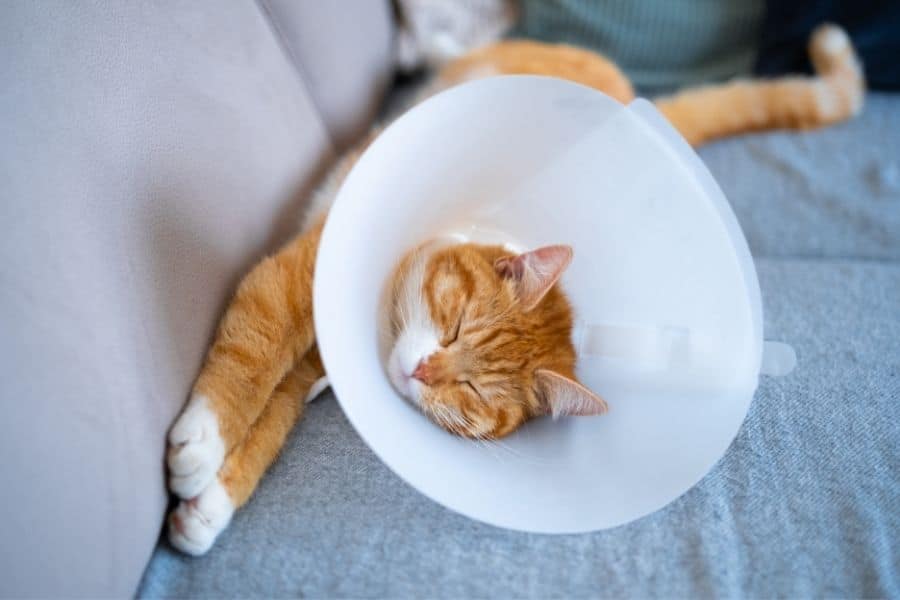
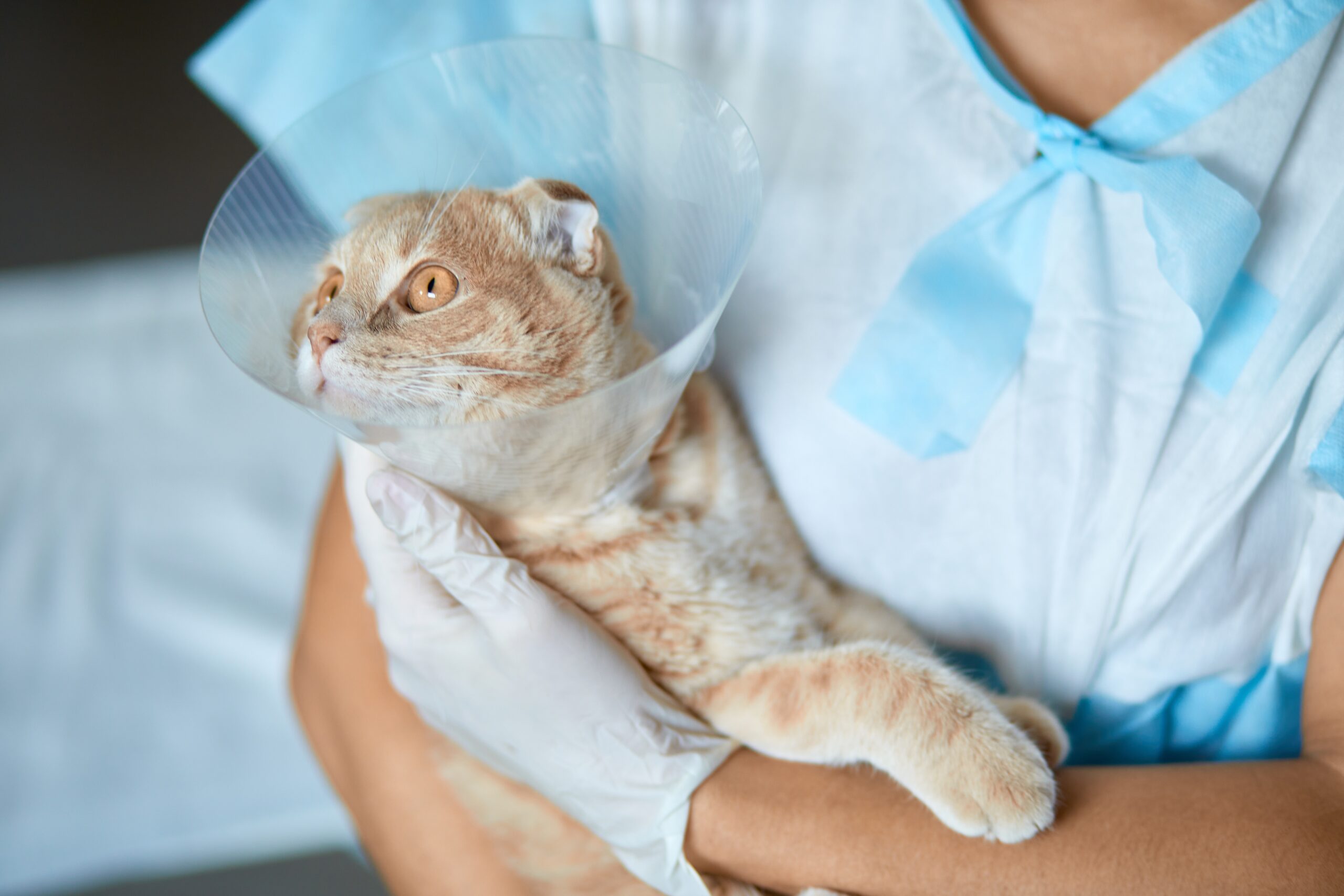
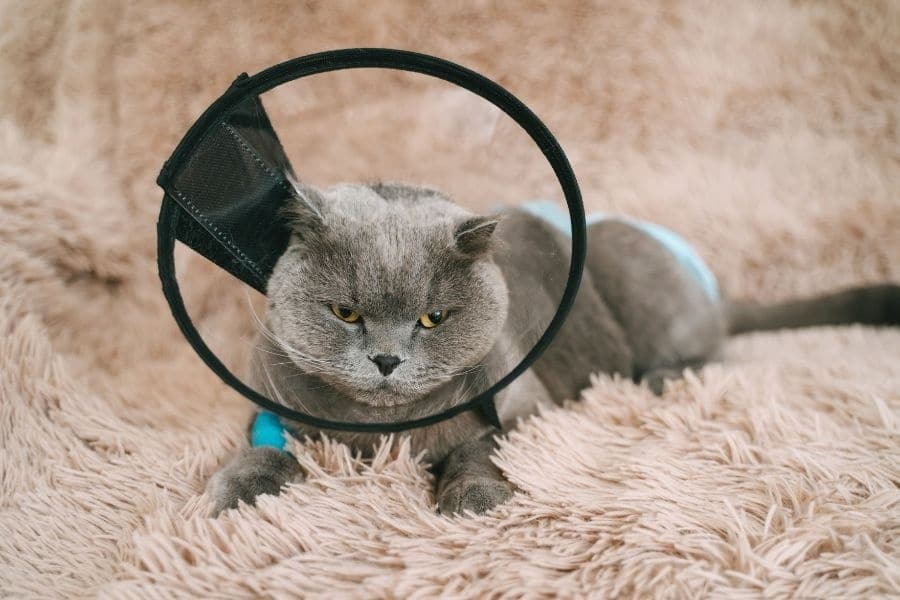
Depending on the operation, your cat may need an Elizabethan collar or a veterinarian-approved recovery garment. These devices help prevent licking, chewing, or scratching at the surgical site.
Check that the protective equipment fits correctly and does not interfere with breathing, eating, drinking, or resting. Some cats initially resist wearing a collar, but removing it without veterinary approval can expose the incision to damage.
Inspect the surgical site according to the discharge instructions. Contact your veterinarian if you notice increasing redness, swelling, discharge, bleeding, an opening in the incision, or a persistent unpleasant odor.
Never apply ointments, cleaning solutions, or home remedies unless the veterinary team has approved them. Protective equipment and incision care should always match the type of procedure performed.
Follow Medication and Rest Instructions Carefully
Prescribed medications may help manage discomfort and support a more comfortable recovery. Give each medication exactly as directed, and keep a written record of doses to prevent missed or duplicated administrations.
Do not give human pain relievers or medication prescribed for another pet. If your cat appears uncomfortable, unusually restless, or reluctant to settle, contact your veterinarian rather than adjusting the medication yourself.
Restlessness does not always mean your cat simply has too much energy. Pain, nausea, stress, or a medication-related effect can also change behavior. Your veterinary team can assess the symptoms and advise whether the recovery plan needs adjustment.
Avoid returning to normal activity early just because your cat seems more energetic. Attend follow-up appointments and ask when climbing, running, and vigorous play can safely resume.
Recognize Signs That Need Veterinary Attention
Some changes in behavior are expected after a procedure, but worsening symptoms deserve attention. Contact your veterinarian if your cat becomes increasingly restless, hides continuously, stops eating beyond the recommended timeframe, vomits repeatedly, or shows signs of worsening discomfort.
Significant bleeding, an incision that opens, difficulty breathing, collapse, or a sudden decline in responsiveness requires immediate veterinary attention. Do not wait for a scheduled follow-up when serious symptoms occur.
Keep notes about your cat’s activity, appetite, medication schedule, and incision appearance. This information can help your veterinarian assess recovery and recommend the next steps.
Get Recovery Guidance From All Creatures Veterinary Center
Keeping an energetic cat calm after surgery requires preparation, patience, and consistent routines. A secure recovery area, quiet enrichment, controlled feeding, and carefully managed activity can help protect healing tissues while keeping your cat comfortable.
If your cat is scheduled for a procedure or is struggling to rest afterward, contact All Creatures Veterinary Center in Carrollton. The veterinary team can explain post-operative instructions, discuss activity restrictions, and help you understand the care involved in pet surgical services and veterinary surgery. Schedule an appointment or consultation to discuss a recovery plan suited to your cat’s needs.
Frequently Asked Questions
Q1. How long should I keep my active cat from jumping after surgery?
Ans: The restriction period depends on the procedure and your cat’s healing progress. Follow your veterinarian’s instructions and do not allow jumping to resume simply because your cat seems energetic or comfortable.
Q2. Can I play with my cat while they recover from surgery?
Ans: Gentle interaction may be appropriate if your veterinarian permits it. Choose quiet, low-movement activities and avoid games that encourage running, jumping, twisting, or vigorous pouncing.
Q3. Should I use a crate to keep my cat calm after surgery?
Ans: A crate or recovery pen may be appropriate for some cats and procedures, but it must provide enough space for comfort and essential needs. Ask your veterinarian whether confinement is suitable for your cat.
Q4. Why is my cat restless even though they need to rest after surgery?
Ans: Restlessness can result from boredom, stress, pain, nausea, or medication effects. If your cat cannot settle or seems increasingly uncomfortable, contact your veterinary team for guidance.
Q5. What should I do if my cat jumps onto furniture during recovery?
Ans: Calmly guide your cat back to the recovery area without chasing or startling them. Check for new signs of discomfort or changes around the incision, and contact your veterinarian if you notice concerning symptoms.